
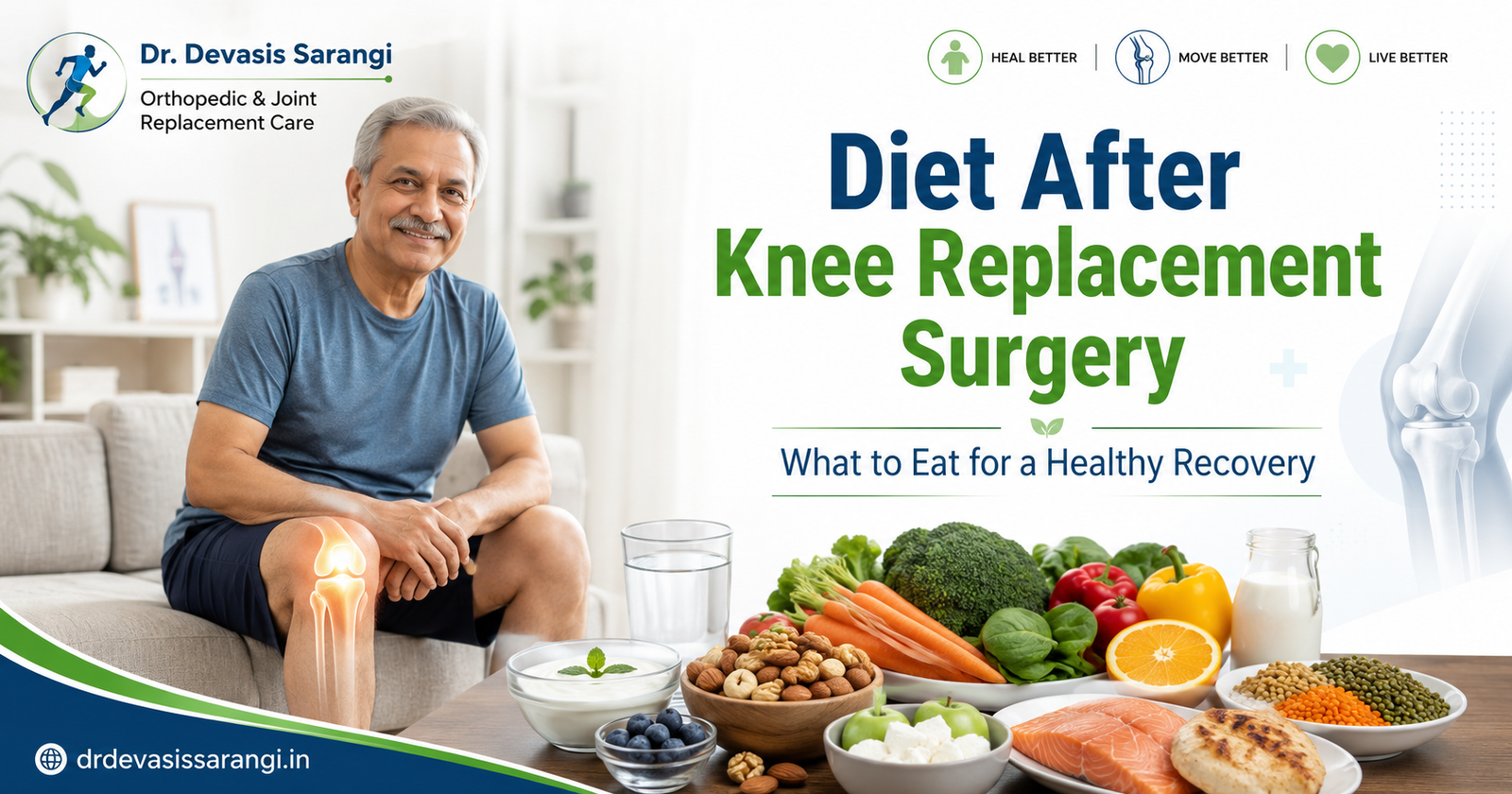
Diet After Knee Replacement Surgery: Foods to Eat and Avoid for Better Recovery
Knee replacement surgery can significantly reduce joint pain and improve mobility. However, surgery is only the first step. Physiotherapy, proper wound care, medication and a nutritious diet after knee replacement surgery all play important roles during recovery.
After surgery, the body needs additional energy, protein, vitamins, minerals and fluids to repair tissues and support wound healing. Eating a balanced diet may also help maintain muscle strength, improve energy levels and prevent common postoperative problems such as constipation.
This guide explains the best foods to eat after knee replacement surgery, foods that should be limited and a simple Indian diet chart for knee replacement recovery.
Important: Every patient’s medical condition is different. Patients with diabetes, kidney disease, heart disease, food allergies or blood-thinning medication should follow the personalised dietary instructions provided by their surgeon or dietitian.
Why Is Diet Important After Knee Replacement Surgery?
During the recovery period, the body uses nutrients to:
- Repair the surgical wound and surrounding tissues
- Maintain muscle strength during reduced activity
- Support the immune system
- Restore energy after surgery
- Maintain healthy bowel movements
- Support physiotherapy and rehabilitation
Protein and energy requirements may temporarily increase while the body is healing. When the diet does not provide enough protein, the body may break down muscle tissue to meet its recovery needs.
A good knee replacement recovery diet should therefore include protein, vegetables, fruits, whole grains, healthy fats and sufficient fluids.
Best Foods to Eat After Knee Replacement Surgery
1. Protein-Rich Foods
Protein is one of the most important nutrients in a post knee replacement diet. It provides the building blocks required for tissue repair and helps maintain muscles while physical activity is temporarily reduced.
Good protein sources include:
Non-Vegetarian Options
- Eggs
- Fish
- Chicken
- Lean meat
- Milk and curd
- Paneer
- Unsweetened yoghurt
Vegetarian Options
- Dal
- Moong dal
- Masoor dal
- Rajma
- Chana
- Soybeans
- Tofu
- Paneer
- Milk
- Curd
- Nuts and seeds
Try to include a protein source in every main meal. For example, breakfast may include eggs or paneer, lunch may include dal and curd, and dinner may include fish, chicken, tofu or legumes. Hospitals providing orthopaedic recovery guidance commonly recommend protein-rich foods because they support healing after surgery.
Patients should not begin protein powders or high-protein supplements without consulting their doctor, especially when kidney function is reduced.
2. Vitamin C-Rich Fruits and Vegetables
Vitamin C contributes to normal collagen formation and supports the wound-healing process. Include a variety of fresh fruits and vegetables rather than depending only on packaged juices.
Vitamin C-rich foods include:
- Amla
- Guava
- Oranges
- Mosambi
- Papaya
- Strawberries
- Tomatoes
- Capsicum
- Broccoli
- Lemon
Add lemon to dal, salad or vegetables, or have a serving of fresh fruit between meals. The Royal National Orthopaedic Hospital includes vitamin C among the nutrients required by the body during recovery and wound healing.
Patients with diabetes should control fruit portions and follow their prescribed meal plan.
3. Iron-Rich Foods
Some patients may experience temporary weakness following surgery. Iron is required for normal red blood cell production and energy metabolism. Your surgeon may recommend blood tests or iron supplementation when medically necessary.
Iron-rich foods include:
- Green leafy vegetables
- Lentils and beans
- Sesame seeds
- Eggs
- Lean meat
- Fish
- Dates and raisins in controlled portions
- Iron-fortified cereals
Combining plant-based iron foods with a vitamin C source may support iron absorption. For example, add lemon to spinach, dal or chana. Orthopaedic recovery guidance notes that some patients may be advised to take iron or vitamin supplements, but these should be taken only under medical supervision.
4. High-Fibre Foods
Constipation is common after major surgery because of reduced movement, changes in routine and certain pain medicines. Eating fibre-rich foods and drinking sufficient fluids can help maintain regular bowel movements.
Healthy fibre sources include:
- Oats
- Dalia
- Brown rice
- Whole-wheat roti
- Fruits with edible skin
- Vegetables
- Dal and beans
- Flaxseeds
- Chia seeds
- Whole-grain cereals
Increase fibre gradually. A sudden large increase may cause bloating or gas. Fibre is also less effective without adequate fluid intake.
Contact your doctor if constipation is severe, persistent or accompanied by abdominal pain, nausea or vomiting. Do not take laxatives without medical advice.
5. Adequate Fluids
Good hydration supports normal digestion and helps reduce constipation. Water, soup, dal water, buttermilk and other unsweetened fluids may be included according to your doctor’s recommendations.
The AAOS advises knee replacement patients to drink plenty of fluids and avoid alcohol during recovery.
Keep a water bottle nearby if walking to the kitchen is difficult. Patients with heart failure, kidney disease or fluid restrictions must follow the amount prescribed by their doctor.
6. Whole Grains and Healthy Carbohydrates
The body needs energy for healing and physiotherapy. Avoid removing carbohydrates completely from the diet after knee replacement surgery.
Choose nutritious carbohydrate sources such as:
- Oats
- Dalia
- Whole-wheat roti
- Brown or hand-pounded rice
- Millets
- Sweet potato
- Potatoes
- Whole-grain bread
Whole-grain foods also provide fibre and can support healthy bowel movements. A balanced postsurgical diet should include starchy foods, with whole-grain varieties chosen where practical.
Portion sizes should be adjusted for patients with diabetes or weight-management requirements.
7. Dairy and Calcium-Containing Foods
Milk, curd and paneer provide protein along with calcium and other nutrients. They can be included as part of a balanced knee replacement recovery diet unless the patient is lactose intolerant or has been advised to restrict dairy products.
Suitable options include:
- Low-fat milk
- Plain curd
- Paneer
- Unsweetened yoghurt
- Fortified dairy alternatives
Avoid flavoured yoghurts and milk drinks containing excessive added sugar.
Foods to Avoid After Knee Replacement Surgery
There is usually no single prohibited food after knee replacement surgery. However, certain foods may interfere with appetite, digestion, weight management or medication.
1. Alcohol
Alcohol should be avoided during the early recovery period, particularly while taking painkillers, antibiotics, sleeping medicines or blood thinners. The AAOS specifically advises patients to avoid alcohol following knee replacement surgery.
Ask your surgeon when it is medically safe to consume alcohol again.
2. Deep-Fried and Highly Processed Foods
Limit foods such as:
- Deep-fried snacks
- Chips
- Packaged namkeen
- Fast food
- Processed meat
- Sugary bakery products
- Instant noodles
- Highly processed ready-made meals
These foods may provide excessive calories, salt or sugar while supplying fewer of the nutrients needed for healing. They may also make long-term weight management more difficult.
3. Excessive Sugar
Limit sweets, sugary drinks, desserts and packaged fruit juices. This is particularly important for patients with diabetes because blood sugar management is an essential part of postoperative medical care.
Choose whole fruit instead of juice whenever permitted by your doctor.
4. Excessive Salt
Packaged soups, pickles, papad, chips, sauces and processed foods may contain high amounts of sodium. Patients with high blood pressure, heart disease, kidney disease or significant swelling should follow their doctor’s sodium recommendations.
Do not completely eliminate salt unless instructed by a healthcare professional.
5. Unapproved Supplements and Herbal Products
Do not automatically begin calcium, iron, vitamin D, protein powder or herbal supplements after surgery. Supplements may be unnecessary, may contain unsuitable doses or may interact with prescribed medicines.
Your doctor may recommend supplements after reviewing your diet, medicines and laboratory reports. AAOS guidance notes that iron and vitamin supplements may be recommended for some patients rather than being required for everyone.
Special Precaution for Patients Taking Blood Thinners
Blood-thinning medicines are often prescribed after knee replacement surgery to reduce the risk of blood clots. Follow the exact medication and dietary instructions given at discharge.
Patients taking warfarin may receive specific instructions about vitamin K-rich foods and supplements because vitamin K can affect warfarin treatment. Foods such as spinach, kale, broccoli, cabbage, lettuce, soybeans and certain legumes should not be suddenly added, removed or consumed in unusually large quantities without consulting the treating team. Regular INR monitoring may also be required.
Do not stop vegetables or prescribed blood thinners independently.
Indian Diet Chart After Knee Replacement Surgery
The following is a general example. Portions should be adjusted according to age, appetite, diabetes, kidney function and medical advice.
Early Morning
- One glass of warm water
- Two soaked almonds and one walnut, when permitted
Breakfast
Choose one:
- Vegetable oats with one boiled egg
- Two moong dal chillas with curd
- Vegetable poha with sprouts
- Paneer vegetable sandwich on whole-grain bread
- Dalia with vegetables and a glass of milk
Mid-Morning
Choose one:
- Guava
- Papaya
- Orange or mosambi
- Apple
- Unsweetened buttermilk
Lunch
- Two whole-wheat rotis or a moderate portion of rice
- One bowl of dal, rajma or chana
- One bowl of cooked vegetables
- Salad, when tolerated
- Plain curd
- Fish or chicken for non-vegetarian patients
Evening Snack
Choose one:
- Roasted chana
- Sprouts chaat
- Vegetable soup
- Unsweetened yoghurt
- One boiled egg
- A small portion of nuts
Dinner
- Roti, dal and vegetables
- Vegetable khichdi with curd
- Grilled fish or chicken with vegetables
- Paneer or tofu with roti
- Moong dal khichdi with cooked vegetables
Before Bed
- Warm milk, when tolerated and permitted
This sample meal plan includes protein, whole grains, vegetables, fruit and fluids—the main components recommended in balanced surgical recovery guidance.
What to Eat When Appetite Is Low
Reduced appetite, nausea or early fullness may occur temporarily after surgery. Instead of forcing three large meals, try:
- Five or six smaller meals
- Soft khichdi with curd
- Dal soup
- Egg or paneer sandwiches
- Milk or yoghurt
- Smooth soups
- Small servings of fruit
- Nutrient-dense snacks
Prioritise protein-containing foods first. Persistent vomiting, inability to eat or drink, worsening weakness or signs of dehydration should be reported to the doctor.
Additional Tips for Knee Replacement Recovery
Maintain a Healthy Body Weight
Avoid crash dieting immediately after surgery. The body needs sufficient nutrition for healing. Once the early recovery period is complete, gradual weight management can reduce unnecessary pressure on the replaced joint. AAOS recovery advice encourages patients to monitor their weight to avoid additional joint stress.
Combine Diet with Physiotherapy
Food cannot replace prescribed exercise and physiotherapy. Follow the rehabilitation programme provided by your orthopedic surgeon and physiotherapist.
Avoid Smoking
Smoking may interfere with recovery and should be stopped before and after surgery. Patients planning knee replacement are commonly advised to stop smoking, maintain a healthy diet and manage body weight as part of surgical preparation.
Frequently Asked Questions :
What is the best food after knee replacement surgery?
Protein-rich foods such as eggs, fish, chicken, paneer, tofu, dal and curd are particularly useful because protein supports tissue repair and helps maintain muscle. These should be combined with vegetables, fruits, whole grains and sufficient fluids.
Can I eat rice after knee replacement surgery?
Yes. Rice can be included as part of a balanced diet unless your doctor has restricted it. Choose a moderate portion and combine it with dal, vegetables, curd, eggs, fish, chicken, paneer or tofu.
Which fruits are good after knee surgery?
Guava, amla, papaya, oranges, mosambi, apples and berries can provide vitamins and fibre. Patients with diabetes should follow personalised fruit portions.
How can I prevent constipation after surgery?
Consume fibre-rich foods, drink fluids as permitted and stay mobile according to the physiotherapist’s instructions. Some pain medicines can cause constipation, so contact your doctor if the problem continues.
Should I take protein powder after knee replacement?
Not without medical advice. Some patients may benefit from oral nutritional supplements, but the appropriate product and amount depend on appetite, kidney function, body weight and overall health.
How long should I follow a recovery diet?
A nutrient-rich diet is particularly important while the wound is healing and rehabilitation is ongoing. However, balanced eating and healthy weight management should continue long term to support overall health and reduce excessive stress on the joint.
Conclusion :
A balanced diet after knee replacement surgery can support wound healing, energy levels, muscle maintenance and rehabilitation. Include protein-rich foods, vegetables, fruits, whole grains and adequate fluids while limiting alcohol, highly processed foods, excessive sugar and unnecessary supplements.
Your diet should always be adjusted according to your medical conditions and prescribed medicines. For personalised advice about knee replacement surgery, postoperative care and rehabilitation, consult Dr. Devasis Sarangi, Orthopedic and Joint Replacement Surgeon in Bhubaneswar.8
